Smart Speakers for Ham Radio: Voice Control & Reliability
31st Mar•3 min read
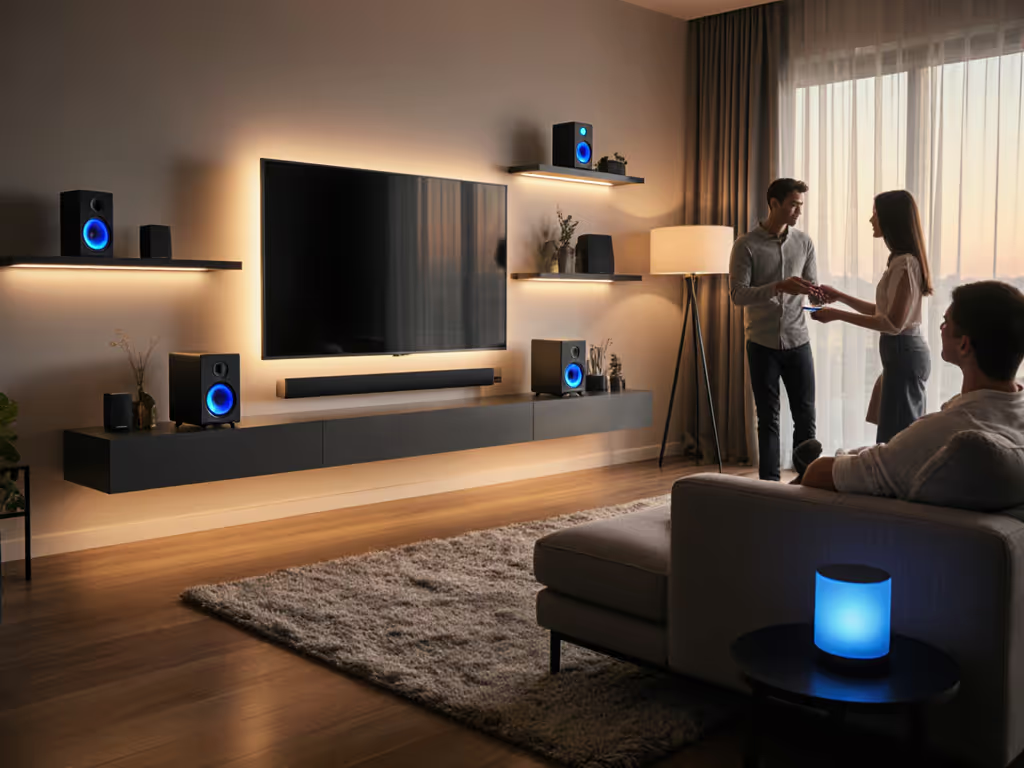
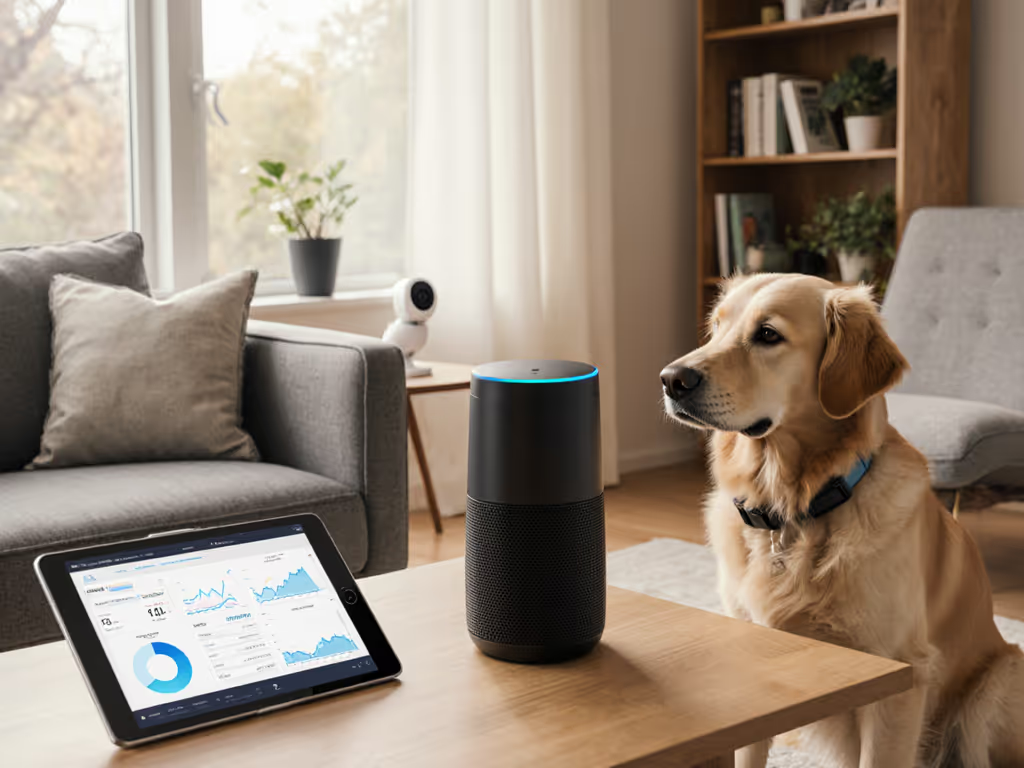
When your smart home speaker systems blare a 6am nursery alarm during baby's nap time, you'll quickly learn that surround sound voice control should serve your household, not disrupt it. I've helped dozens of families navigate this exact pain point, transforming chaotic voice experiences into seamless background helpers that earn partner approval. Forget flashy specs that collect dust; today we're building voice-controlled surround sound that actually lowers household friction while delivering cinematic immersion when you want it.
Let's be honest: most smart speaker setups feel like adding another job to your never-ending to-do list. "Alexa, why did you turn on the lights?" "Google, why can't you hear me in the kitchen?" These micro-frustrations pile up until someone bans voice control entirely (like my partner did after that nursery incident).
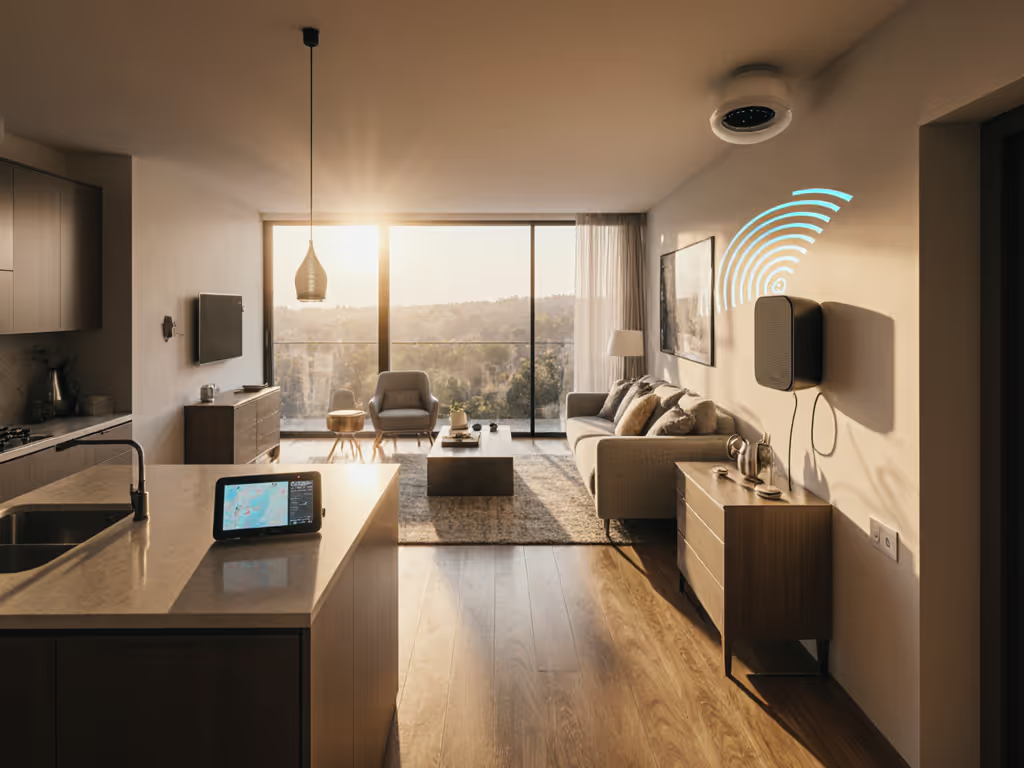
The truth is simple: Routines first, devices second, and every room earns its keep. To put this into practice fast, try setting up reliable Alexa routines for your top daily actions. Your home shouldn't require a PhD in voice UX to operate. Smart speakers should be like electricity, unnoticed when working perfectly, only acknowledged when absent.
Here's what separates systems that become household heroes from those that collect dust:
Before you buy another speaker, ask: "What specific routine will this solve in this space?" I've mapped hundreds of homes and found that these room personas consistently deliver partner approval:
Persona: Needs cinematic immersion without constant recalibration
Key Routine: "Movie night" activation (dim lights, close blinds, launch streaming)
Critical Feature: Voice control that works during content ("Louder," "Pause")
Common Pitfall: Over-engineered setups that require "Alexa, initiate cinematic experience protocol"
Your living room system should respond to simple phrases like "Cinema mode" without making your guests feel like mission control operators.
Persona: High-noise, multi-tasking zone requiring instant reliability
Key Routine: Recipe navigation and timer management
Critical Feature: Far-field mics that work over running water and chopping
Common Pitfall: Voice systems that time out before you finish saying "Set timer for fifteen minutes"
Persona: Needs gentle wake-ups and absolute privacy assurances
Key Routine: Sunrise simulation without disruptive alarms
Critical Feature: Physical mute indicators visible in dim light
Common Pitfall: Smart speakers broadcasting partner's calendar events at 3am
Persona: Should enable basic functions without exposing household data
Key Routine: "Play relaxing music" without accessing personal playlists
Critical Feature: Temporary guest profiles that auto-delete after check-out
Common Pitfall: Voice assistants reading host's text messages when guests ask for weather
Before investing in voice-controlled surround sound, run these critical tests with your household's primary skeptic (often the partner who banned voice control):
Brands that ace this checklist (like the Sonos Arc Ultra system with its tactile mute button and predictable routines) consistently earn household approval where flashier systems fail. When your mother-in-law can reliably say "Play jazz" in the living room without triggering three different music services, you've built something that will last.
Follow this practical framework to avoid common pitfalls:
Step 1: Identify your household's top 3 daily friction points (e.g., "kids can't set safe timers," "guests can't play music")
Step 2: For each room, define ONE voice command that solves that friction:
Step 3: Install physical fallbacks within arm's reach:
Step 4: Teach your household ONE phrase per room (no more):
This approach transformed my own home from voice-control battleground to seamless background helper. When the tech becomes invisible, that's when you've won.
Most households give up on multi-room home speaker system setups because:
Here's your reality check: true multi-room harmony happens when you standardize on one ecosystem for audio routing, regardless of your voice assistant preferences. For genuine reliability:
The Sonos Arc Ultra system demonstrates this beautifully, integrating with Alexa, Google Assistant, and Apple HomeKit while maintaining consistent audio routing. For deeper entertainment control, compare platforms in our voice-controlled home theater guide. When your teenager can say "Play my workout playlist everywhere" and have it just work across systems, you've built something durable.
Before adding another speaker to your home, run this 15-minute partner-approved test:
This simple routine-first approach has converted the most skeptical partners into voice control advocates. When your tech disappears into daily life while delivering cinematic sound from your smart speakers when you want it, you've built something lasting.
Tomorrow morning, before checking email:
You don't need the "best smart speaker for home" on paper, you need the system that disappears into your life while delivering exactly what your household needs, exactly when you need it. Start small, earn trust room by room, and watch as voice control transforms from household headache to invisible helper.
Remember: The most successful smart home isn't the one with the most devices, it's the one where you forget the technology exists because it simply works.