
eSports Smart Speakers: Platform Comparison
2nd May•10 min read
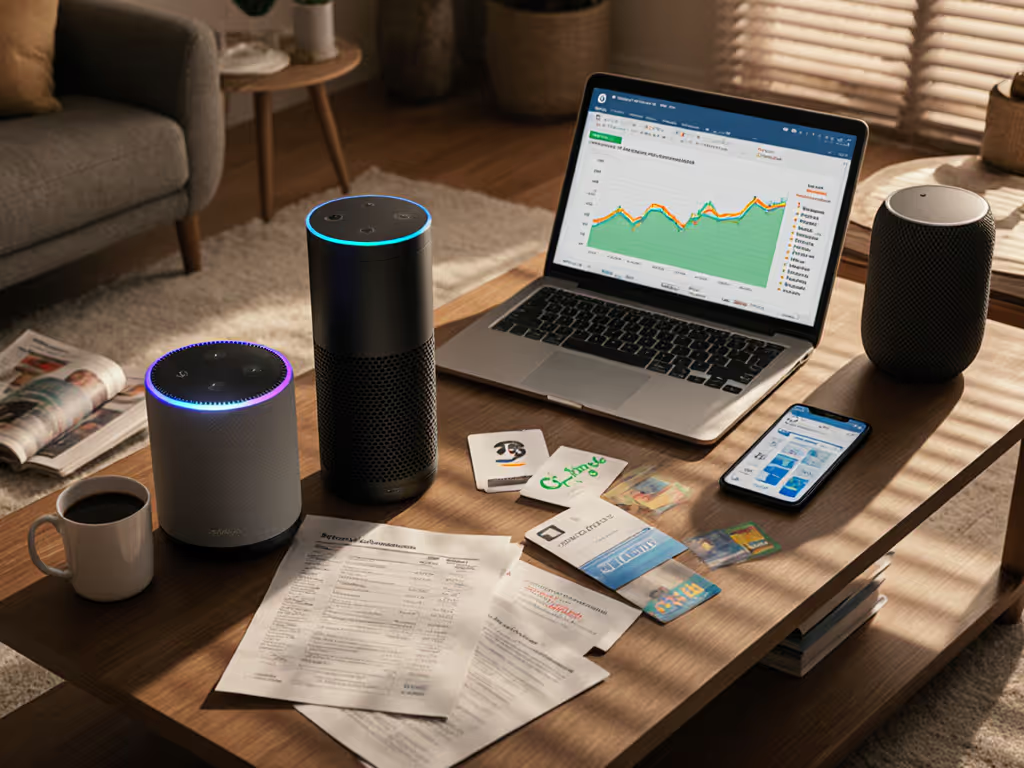
Let's cut through the marketing haze: smart speaker subscriptions and voice assistant premium services aren't optional extras anymore, they're the hidden tax on your "free" voice assistant. After witnessing how subscription creep eroded the value of my first multi-ecosystem speaker setup (a disaster involving three incompatible brands in one apartment), I've dedicated my work to mapping failure domains before they bite you. Today, we're dissecting the actual long-term costs of voice services that most reviews ignore, because reliability isn't just about hardware. It is architected through standards, predictable costs, and graceful degradation when things inevitably break. If you're wondering why 'free' assistants push paid tiers, our smart speaker business model breaks down how voice platforms monetize through subscriptions, data, and lock-in.
Contrary to marketing spin, your "free" voice assistant isn't free. Smart speaker subscriptions manifest in three insidious layers:
Most buyers fixate on the $50 speaker price tag, ignoring that a voice service subscription comparison can reveal a 500%+ cost escalation over five years. That hallway speaker lesson taught me: integration beats invention, especially when your voice assistant becomes a paywalled feature.
Because your speaker's true cost isn't on the box. Let's benchmark real TCO (Total Cost of Ownership) for common scenarios:
| Service Model | Hardware Cost | 5-Year Subscription Cost | Total Cost | Critical Failure Point |
|---|---|---|---|---|
| Basic Free Tier | $49 | $0 | $49 | No advanced AI features, limited third-party integrations |
| Premium Voice Tier (e.g., Alexa+) | $50 | $1,200 | $1,250 | Vendor lock-in, feature sunsetting |
| Bundled Music+Voice (e.g., Spotify+Amazon) | $79 | $720 | $799 | Dual-subscription fatigue, profile conflicts |
Key insight: Long-term smart speaker costs explode when you conflate "voice assistant" with "content delivery." If you're still choosing a platform, see our ecosystem comparison to avoid hidden lock-in costs. That Nest Mini you bought for kitchen timers could cost more than a MacBook Pro over five years if you add every "recommended" subscription. Always conduct a plain-English networking preflight: "What breaks if I cancel this service tomorrow?"
| Platform | Current Free Tier | Premium Tier Cost | "Must-Have" Premium Features | Critical Gaps |
|---|---|---|---|---|
| Amazon Alexa | Basic commands, smart home control | $20/mo (Alexa+) | Contextual memory, voice polish, code interpreter | Sunsets features arbitrarily (e.g., discontinued Alexa Guard Plus) |
| Google Assistant | Full capabilities (as of late 2025) | None announced | None yet (but Gemini for Home may change this) | Limited Matter controller functionality without subscription hints |
| Apple Siri | Basic HomeKit control | $0 | None | Requires Apple Music for full functionality |
| Multi-Service Hybrid | Blinkist summaries ($13/mo) | Spotify Premium ($11/mo) | Seamless cross-platform audio | Profile fragmentation, no unified billing |
"Bridge less, standardize more; your future self will thank you." This isn't theoretical, it is cost math. That $9.99 Kobo subscription might save you from Blinkist's $12.99/month, but only if your speaker ecosystem supports both without profile switching hell.
Premium voice assistant features like "advanced contextual understanding" sound great until your automation breaks because:
In my home lab, I enforce failure-domain thinking by categorizing subscriptions:
When Downpour's rental model lured me with $12.99/month flexibility, I discovered that 30% of rentals blocked offline listening, killing my graceful degradation pattern during internet outages. Always ask: "Does this subscription introduce a single point of failure?" For concrete steps to control what your assistant records, use our privacy checklist.
Architect for smart speaker value analysis using these principles:
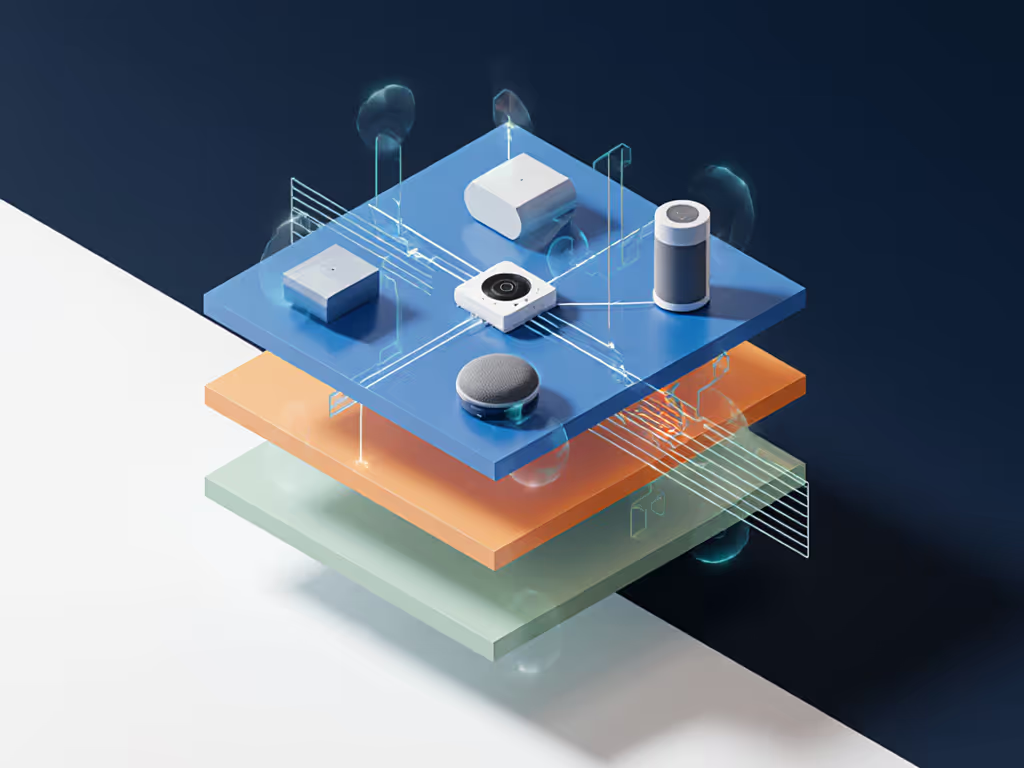
When I standardized my hallway speakers on Thread and mapped VLANs (after that disastrous first apartment experiment), subscription costs vanished. For a standards-first build plan, read our Matter 2.0 and Thread guide. Modern Sonos Era 100 speakers exemplify this: no mandatory voice subscriptions, with local control via Bluetooth when Wi-Fi fails. Compare this to Spotify's 15-hour monthly limit for Premium subscribers, artificial scarcity forcing upgrade paths.
The brutal truth? Most "voice assistant premium services" sell you yesterday's AI at subscription markup. True reliability comes from repeatable configurations that degrade predictably, not clever features that vanish when Microsoft acquires the company (looking at you, Skype).
Your move:
Integration beats invention. Every dollar spent on avoidable subscriptions is a dollar not invested in resilient, standards-first infrastructure. Build systems where the cost curve bends downward, not upward, over time. Your future self (and wallet) will thank you.