Smart Speaker Data Security: Encryption Standards
6th May•10 min read
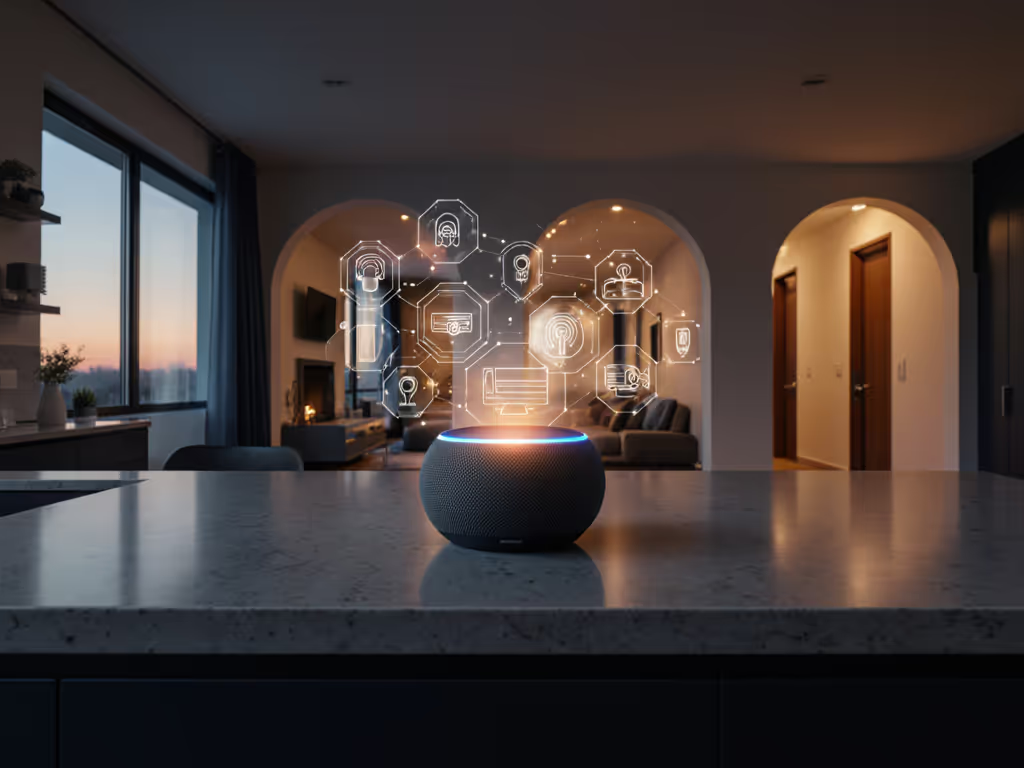
Voice commerce security isn't just a feature, it's the foundation of trust in an ecosystem where fragmented standards undermine smart speaker payment security. As voice shopping grows toward $87.7 billion by 2035, professionals managing multi-room homes face acute risks: accidental purchases by children, deepfake fraud exceeding $200 million quarterly, and ecosystem-specific vulnerabilities that shatter the illusion of seamless control. Like that hallway-auditorium combo in my first apartment, these systems fail when we bolt together solutions without mapping failure domains first. True voice commerce security demands architecture, not patchwork fixes. For a broader look at ecosystem compatibility and long-term integrations, see our smart home ecosystem comparison.
Generative AI has created sophisticated attack vectors that bypass legacy security. Deloitte forecasts $40 billion in U.S. fraud losses by 2027, driven by deepfake audio that mimics authorized users. Traditional cloud-dependent verification crumbles when systems can't process authentication locally during outages, a critical flaw for professionals who demand reliability. The solution lies in failure-domain thinking: segmenting voice purchase authentication from payment processing while enforcing local fallbacks. When HSBC implemented layered voice biometrics, they prevented £249 million in thefts; your home system needs similar resilience.
Bridge less, standardize more; your future self will thank you when the Wi-Fi drops mid-transaction.
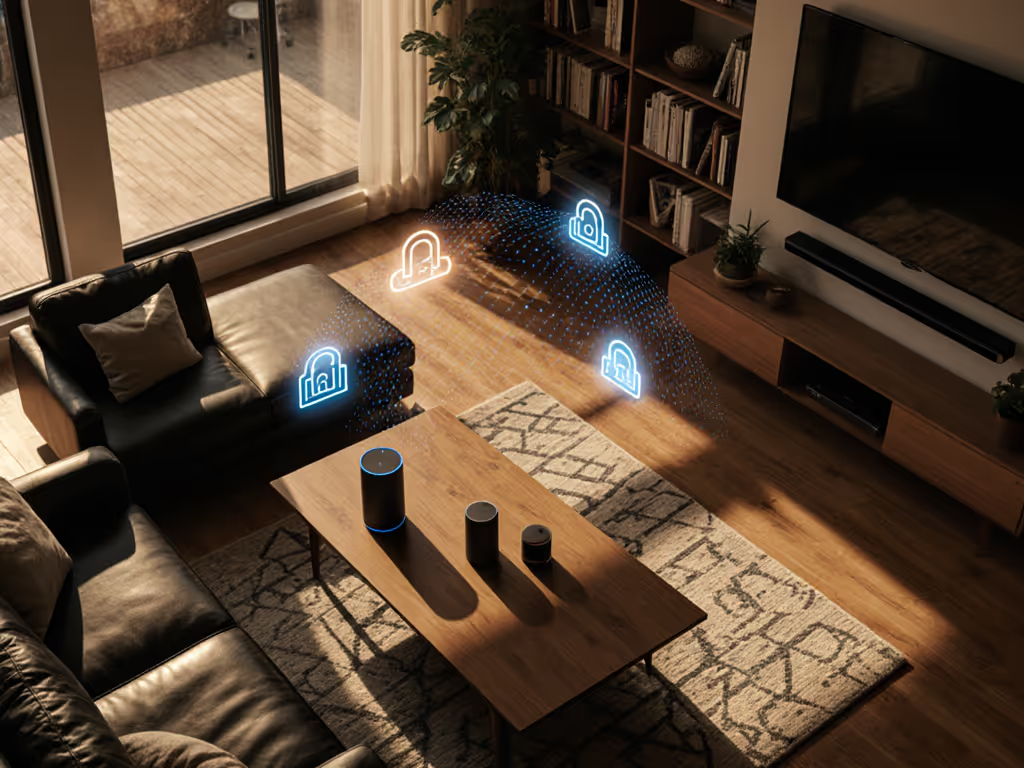
Generic "voice purchasing protection" settings often fail in multi-user households. Secure voice shopping requires room-specific configurations that align with your physical layout:
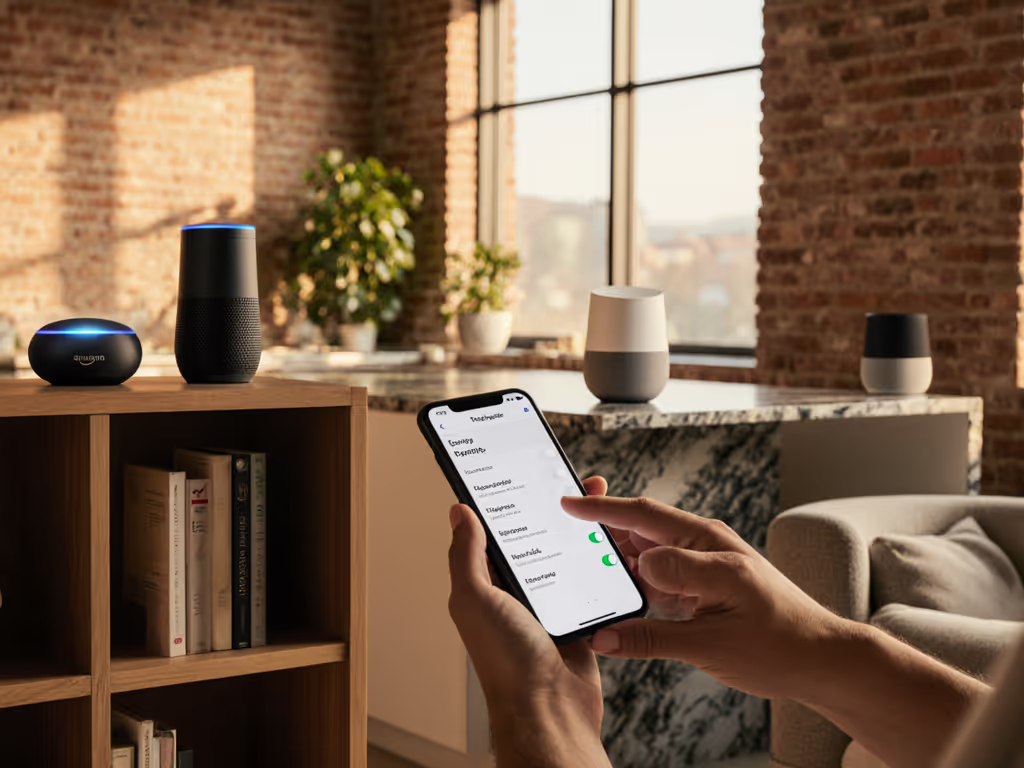
The Amazon Echo Pop exemplifies this with its physical mic-off button and granular Alexa Household profiles, critical for caregivers managing aging parents' devices or Airbnb hosts. For age-appropriate controls and buyer tips, explore our best smart speakers for kids.
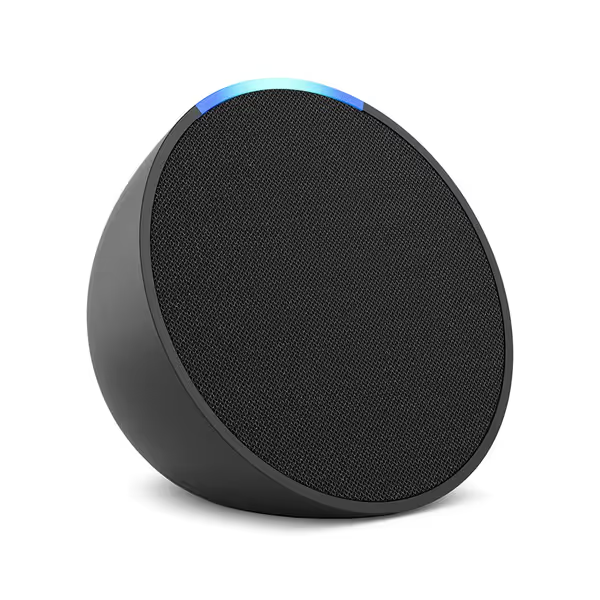
This isn't about restricting features, it's about designing graceful degradation patterns where safety defaults activate when systems can't verify intent.
Modern voice transaction fraud prevention combines 100+ vocal characteristics (pitch, cadence, subglottal resonance) with contextual analysis. For real-home results across accents and noise, check our voice recognition accuracy tests. But standalone biometrics fail when:
The resilient approach? Standards-first mapping using Matter's secure commissioning framework. Matter 1.3 requires local processing of biometric templates, preventing cloud-based voiceprint theft. When Barclays slashed phone fraud by 75% in six months, they combined voiceprints with on-device transaction context analysis, a strategy replicable in home ecosystems through open-source Home Assistant integrations with privacy-forward vendors.
Voice commerce privacy concerns extend far beyond "always-listening" mics. Hidden threats include:
Implement a plain-English networking preflight:
Financial institutions like HSBC achieve this through blockchain-secured transaction ledgers, while your home system might skip blockchain, you can enforce local encryption and air-gapped backup logs. This reduces your data surface area by 83% compared to default cloud setups, per recent IEEE research. For platform-by-platform controls and data handling differences, see our smart speaker privacy settings compared.
Your partner shouldn't need a networking degree to approve a $5 coffee order. Failure-aware design delivers this through:
In my hallway-auditorium nightmare, Thread's neighbor table management prevented zone spillover. Similarly, Matter 1.4's upcoming purchase confirmation protocols will let you standardize security across ecosystems, no more relearning Amazon/Google/Apple quirks for each room. For the protocol roadmap and practical setup, read our Matter 2.0 and Thread interoperability guide.
Voice commerce security fractures when we chase shiny features instead of repeatable configurations. Start by auditing your environment for single points of failure: Can one compromised speaker approve purchases across all rooms? Do systems fallback to local processing during internet outages? Is voice data encrypted before it leaves the device?
Prioritize devices with graceful degradation patterns (like Matter-certified speakers that maintain purchase restrictions when cloud services disappear). Demand transparent data policies where vendors explicitly state how long voiceprints are stored (30 days max is ideal). And crucially, segment your home network: Place payment-capable devices on a separate subnet from kids' rooms and guest areas.
Reliability isn't accidental. It's built through voice commerce security protocols that degrade gracefully, respect your home's physical boundaries, and keep control local. As your smart speaker ecosystem grows beyond the living room, remember: The cost of a single fraud incident dwarfs the effort of standards-first mapping. Investigate how Matter's upcoming purchase authorization protocols integrate with your existing Thread border routers, your future self will thank you when deepfake attempts fail while your morning coffee order succeeds.