Smart Speaker Pricing Strategy: Subsidies, Lock-In, and Value
6th Jun•11 min read
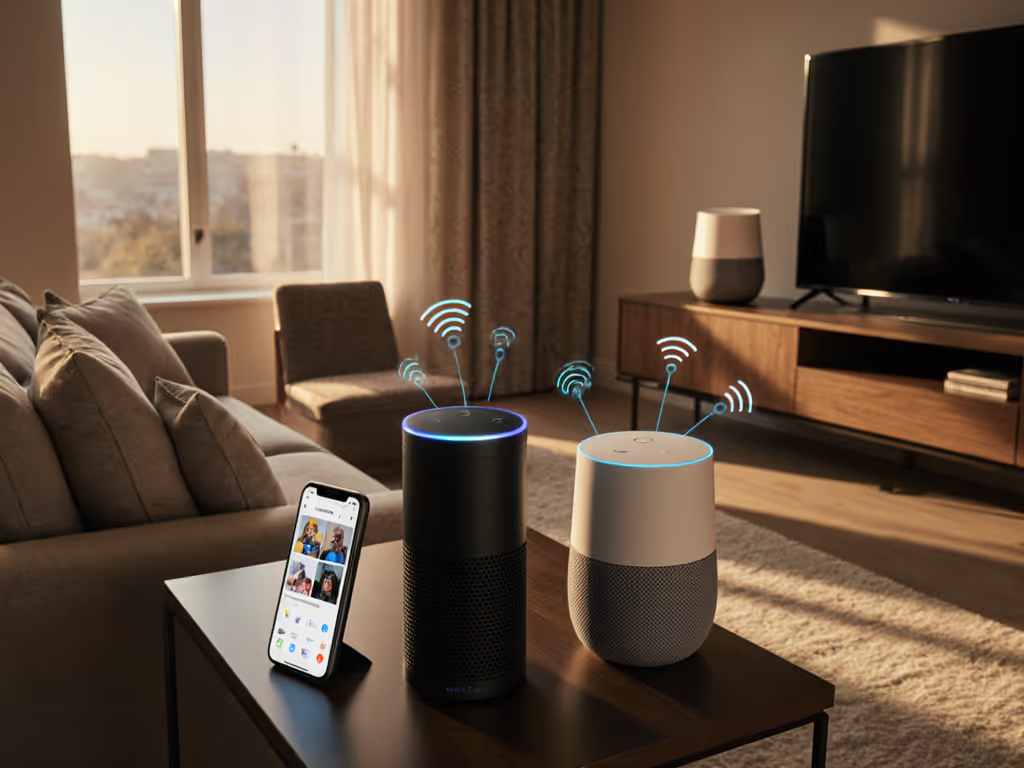
The global smart speaker market trends reveal a paradox: adoption continues surging even as consumers grapple with incompatible ecosystems. Current projections indicate the market will grow from USD 19.62 billion in 2025 to USD 36.48 billion by 2032, reflecting an 11.2% CAGR, yet 68% of households report frustration with voice assistant fragmentation across brands. This disconnect between smart speaker adoption rates and user experience highlights a critical truth: convenience often overrides control until the moment privacy fails the 'dinner party test' (a concept I've witnessed firsthand when a child's innocent question about nicknames exposed invisible data flows). Today's growth isn't just about voice technology penetration; it's about how we rebuild trust through design.
Market data reveals three overlapping drivers:
Crucially, this adoption isn't despite fragmentation, it's because fragmentation hides the true cost of privacy. When families can't audit data flows or explain to guests why the speaker stores months of voice recordings, they're not experiencing convenience. They're experiencing surveillance disguised as utility.
Fragmentation creates two silent crises: technical instability and consent erosion. Consider these evidence-backed realities:
This isn't just technical debt; it's consent debt. Privacy is a usability feature, if guests can't understand it, it's not private. When a visitor hesitates to ask a speaker for weather because they fear data collection, the system has failed its core purpose: to simplify life without eroding trust.
Adopt a 'privacy-first infrastructure' approach. These aren't theoretical ideals, they're actionable steps I've implemented with community groups:
| Platform | Default Voice Retention | Manual Deletion Options | Local Storage Option |
|---|---|---|---|
| Amazon Alexa | 18 months | Web/app only | No |
| Google Assistant | Auto-delete after 3/18 months | Voice command + app | No |
| Apple HomePod | Processed on-device; no voice history | N/A | Yes (optional) |
Print this data flow map and post it where guests can see it. Transparency isn't just compliance, it's the partner/roommate approval factor in action. For a deeper comparison of controls and data handling, see our smart speaker privacy settings guide.
The soaring smart home market forecast (USD 136.3 billion by 2035) proves consumers crave voice control, but they'll abandon vendors who treat privacy as an afterthought. True adoption growth hinges on making consent visible, retention policies digestible, and local processing the norm. Local-first defaults; consent isn't a settings page, it's the foundation of technology that earns a permanent place in homes.
As one parent told me after we rebuilt their system: 'I finally stopped apologizing when guests used the kitchen speaker.' That's the metric that matters, not market size, but mindful adoption. When your niece can safely ask for a bedtime story without triggering a shopping list, you've turned fragmentation into resilience.
Further Exploration: Audit your current setup using the Electronic Frontier Foundation's Privacy-First Smart Speaker Checklist. Document each device's retention period, local processing capability, and guest mode access, then map corrections to your room-by-room routines. Remember: the most advanced speaker is the one your family trusts to listen without remembering.