Smart Speaker Pricing Strategy: Subsidies, Lock-In, and Value
6th Jun•11 min read
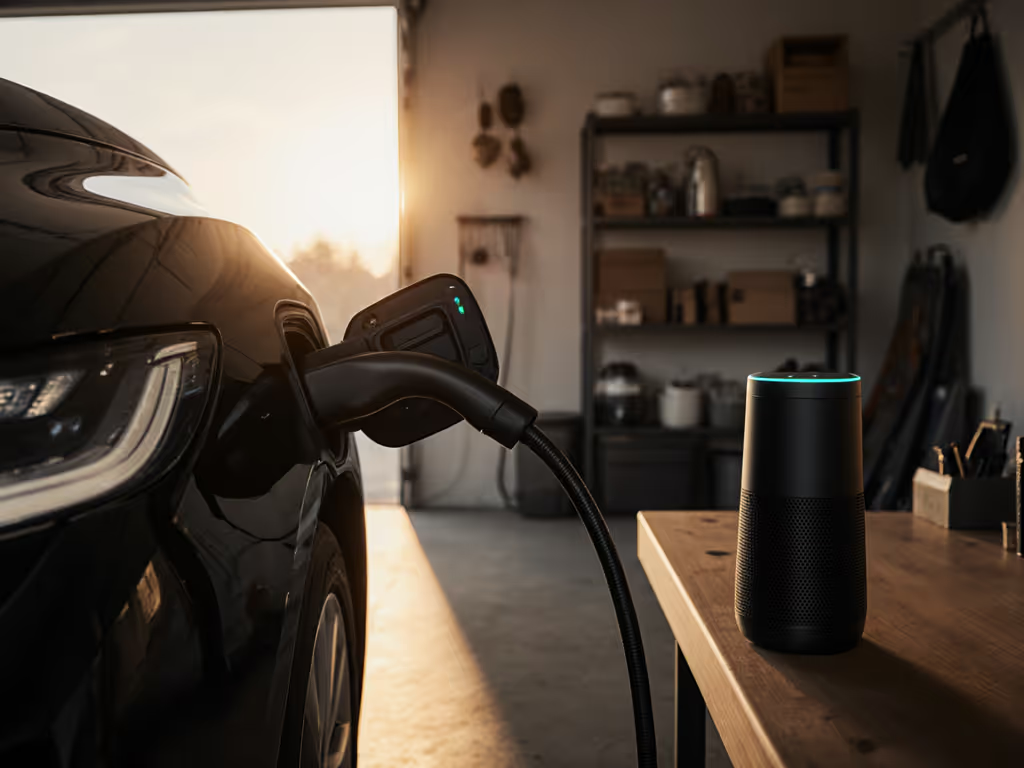
Smart speaker EV charging and voice-controlled EV charging are reshaping how drivers interact with charging infrastructure, but the landscape remains fragmented across ecosystems and vendors. As more electric vehicles integrate with voice assistants (particularly Amazon Alexa, Google Assistant, and manufacturer-specific systems), operators and drivers face critical questions about reliability, interoperability, and whether voice control genuinely simplifies charging or introduces new failure domains.
This FAQ explores the standards, integration patterns, and architectural considerations that separate robust voice charging systems from those destined for frustration.
Voice-controlled EV charging refers to the use of voice assistants to locate chargers, initiate transactions, monitor charging status, and receive alerts (all without touching a screen or kiosk). The most visible implementation to date is the partnership between EVgo and Amazon, which enables drivers with Alexa-enabled vehicles or aftermarket Alexa devices to access data on approximately 150,000 public charging stations through the PlugShare application programming interface (API) beginning in 2023. Users can command Alexa to find compatible chargers by power level and network, estimate arrival state of charge, and authorize payment directly through their Amazon account. For a platform-by-platform breakdown of EV features, see our EV voice platform comparison.
Manufacturers are embedding complementary capabilities into vehicles themselves. Kia EVs, for example, support voice notifications that inform drivers of charging initiation and status changes, allowing users to select notification volume and preferences through the vehicle infotainment system.
Voice control eliminates friction at high-friction moments. When a driver is already managing navigation, route planning, and battery anxiety (particularly on an unfamiliar road), asking "Alexa, find me a 150 kW charger nearby" is faster and safer than scrolling through a mobile app while stationary. Specialized voice agents for electric vehicles handle context-aware queries: they estimate arrival state of charge based on trip goals, suggest preconditioning to speed cold-weather charging, and provide real-time alternatives if a charger is busy.
This hands-free workflow reduces support volume at charging networks. Drivers no longer need to call or email about charger location or compatibility; the system surfaces that information proactively. For fleet operators managing multiple vehicles and drivers, voice-initiated diagnostics and charging policy enforcement (such as preferred networks or idle time limits) lower administrative overhead and energy spend.
Voice charging integrations today operate on proprietary or semi-open APIs rather than standardized protocols. The PlugShare API, owned by EVgo, aggregates charger data from user reports and operational feeds; the Amazon integration consumes this API to populate Alexa responses. This architecture creates a multi-tier dependency: the vehicle or accessory device → Amazon's Alexa service and cloud infrastructure → EVgo's API → charger network operators and real-time status feeds.
In-vehicle voice systems (like Kia's implementation) typically rely on proprietary integrations with the vehicle manufacturer's infotainment stack and OTA (over-the-air) update cycles. There is no unified standardization body for EV voice commands across manufacturers, unlike the emerging standardization efforts around wireless charging pad geometry or charging connector physical specifications.
Matter and Thread, the open-standard protocols backed by the Connectivity Standards Institute, do not yet formally include EV charging as a standardized object type. This means voice-controlled charging remains a collection of ad-hoc integrations rather than a reproducible configuration that survives vendor changes or migrations.
Prefer local when cloud is a single point of failure. For strategies that keep voice control usable with limited connectivity, see our offline smart speaker guide. The EVgo-Alexa model routes all charger discovery, status updates, and payment authorization through Amazon's cloud infrastructure. If Amazon's API is degraded, your Alexa device cannot find available chargers, even if you are standing next to an operational EVgo station and have already authenticated. Worse, a firmware update to Alexa's EV-charging feature could change behavior unpredictably, breaking automations or forcing re-authentication.
In-vehicle systems suffer similar risks. A vehicle that relies on cloud-connected voice agents for charging initiation cannot fall back to a physical kiosk or mobile app if the cloud service times out. This creates a graceful degradation problem: the system should default to the simplest, most local control method when network conditions degrade.
An architecture that prioritizes repeatable configurations and failure-domain thinking would separate concerns:
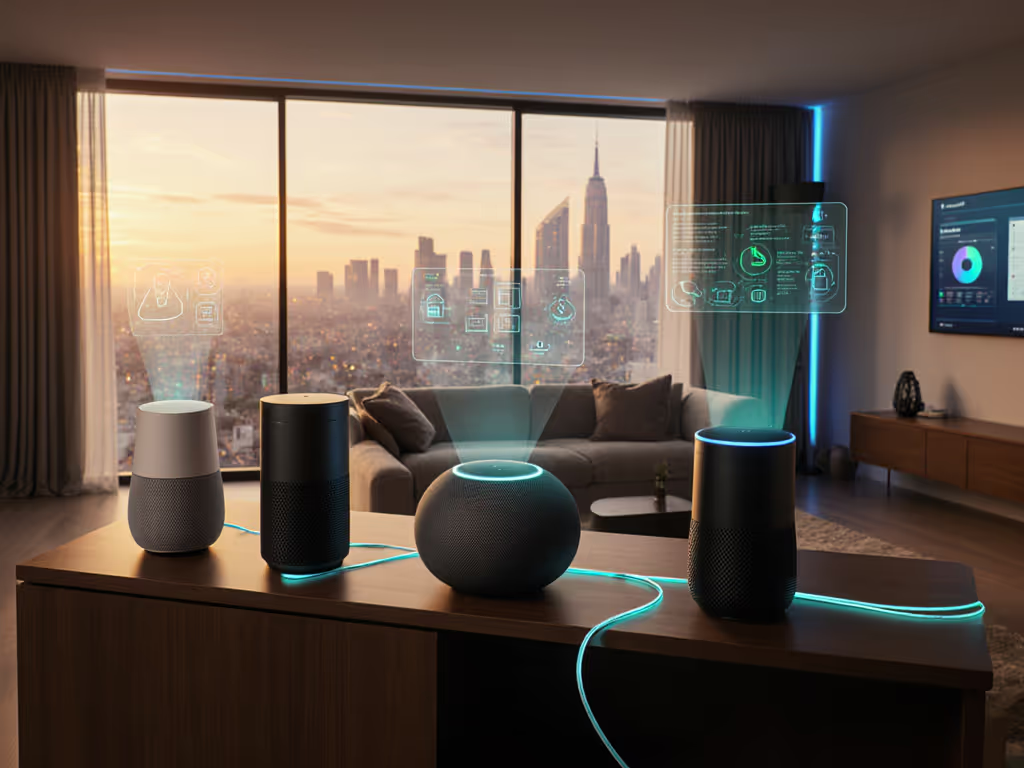
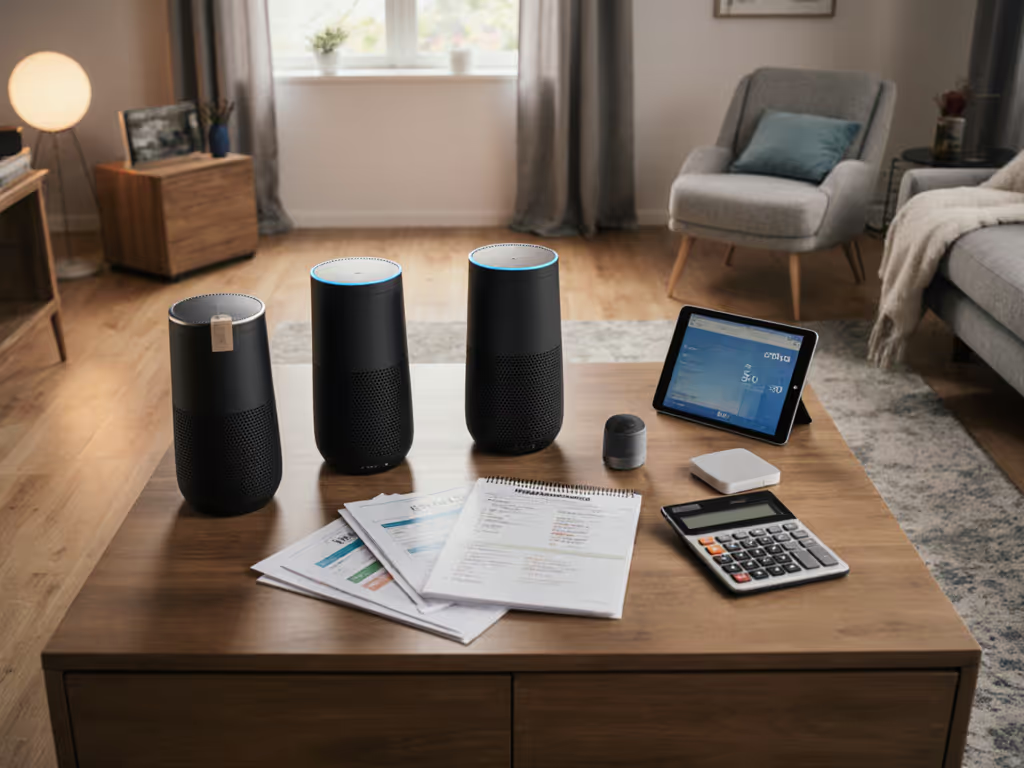
This patterns-first approach mirrors what worked in my first apartment: I stitched together speakers from three ecosystems to cover a narrow hallway and a cavernous living room. Nothing behaved until I standardized on Thread, mapped VLANs, and set graceful fallbacks. That weekend taught me that integration beats invention; reliability beats cleverness; local beats maybe-cloud. If you run multiple ecosystems, our mixed voice assistant guide explains conflict-avoidance strategies that translate well to EV voice overlays. The same principle applies to EV charging.
Currently, real-time charger availability and health status rely on user crowdsourcing and operational feeds from charger networks. PlugShare users check in, report problems, and note conditions, populating the PlugShare API. This is valuable but introduces latency: by the time a driver receives Alexa's recommendation, the "available" charger may already be occupied.
For voice agents to deliver trustworthy recommendations, the system must integrate real-time telemetry directly from chargers (fault codes, power output, connector status) into the voice agent's query engine. Today, that integration is inconsistent. A charger that reports "operational" to the network but has a malfunctioning payment kiosk will still be recommended to a voice-querying driver, recreating the friction the system was designed to prevent.
The EV and smart-home industries should converge on:
FindCharger(power_level, connector_type, availability_state)) that work across Alexa, Google Assistant, and manufacturer systems.Bridge less, standardize more; your future self will thank you. Vendors racing to add voice features without standardizing the underlying APIs and failure modes risk fragmenting the space further, locking drivers into single-ecosystem charging apps.
If you are operating a charging network or deploying voice features in a vehicle:
As a driver, remain skeptical of voice charging recommendations until they improve in accuracy and real-time status. Use voice as a convenience, not a replacement for confirming charger availability through a charger's native app or kiosk before physically pulling in.
The EV charging and smart-home standards landscape is evolving rapidly. Follow the Connectivity Standards Institute's work on Matter for EV charging, monitor EVgo and Amazon for updates to the Alexa-charging integration, and review your vehicle manufacturer's documentation on supported voice assistants and offline charging behavior. For broader in-car voice system best practices, read our automotive voice assistant checklist. Most importantly, build your charging routine around repeatable configurations and documented fallbacks (the mark of a reliable ecosystem).